

Does shaving make your beard thicker? Don’t be fooled by this optical illusion!

Have you ever had this experience: right after shaving, a few days later, you notice that the stubble that grows back seems extra hard and thick? It’s as if your beard has suddenly become more prominent than before. Consequently, the idea that shaving makes your beard thicker seems to be a common belief among many. But the question is, is this really the case?
In fact, the feeling of thicker beards after shaving is mostly just a combination of visual and tactile illusions. Let’s analyze it in detail to see why we have this illusion.
The “cone” pattern of beard growth
First, a beard doesn’t start out thick at the root. Instead, it grows slowly upward from the base of the hair follicle. As the beard grows, its tip tapers and becomes more pointed, forming a natural “taper.” Imagine the end of a stick being rubbed against the ground until it becomes pointed, just like the natural growth process of a beard.
Why does my beard feel thicker after shaving?
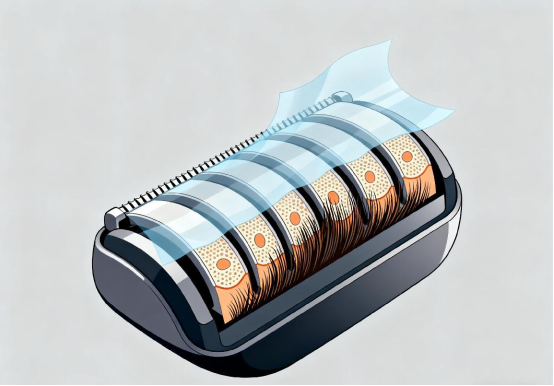
Okay, so here’s the question: What happens when you shave? Actually, the foil shaver doesn’t just remove the pointy ends of your beard; it cuts off the ends, leaving behind the thicker, thicker part near the hair follicles—this is the cross-section of the beard. This cross-section appears much larger than the tapering ends. So the “thicker” you see is actually an illusion created by the cross-section.
Tactile error: The “hard” feeling of a beard
Furthermore, your sense of touch can also make you feel that your beard has become harder. Why? Because the ends of unshaved beard hair are soft and gentle when they touch the skin. However, after shaving, the cross-section becomes sharper, causing a sharper sensation when it touches the skin. This difference further reinforces the impression that the beard has become thicker. In reality, it is simply because the cross-section of the beard is harder.
But in the final analysis, the actual thickness of the beard will not change due to changes in shaving movements.
Beard thickness is determined by genes
So, what exactly determines the thickness of your beard? The answer is simple: genetics. Just like your height, skin color, and hair color, the growth of your beard is determined by your genes. From the number of hair follicles to the hair growth cycle, almost every characteristic of your beard is already “set” by your parents’ genes before you are born. Therefore, whether you shave frequently or only occasionally, it won’t affect the growth pattern of your beard.
Fact: Shaving doesn’t make your beard grow thicker
One thing is certain: the idea that shaving makes your beard grow thicker is a misconception. As medical expert Jeffrey Benabio says, “Shaving and plucking your beard have no effect on the hair that’s already growing.” In other words, no matter how you shave, the growth of your beard won’t change fundamentally.
Shaving: Focus on comfort and efficiency
Since shaving does not make your beard thicker, we should focus more on how to make the shaving process more comfortable and efficient. After all, who doesn’t want to shave with less discomfort and more freshness, right?
Choosing the right razor is crucial. For example , the foil shaver from buyfoilshaver.com features six precision blades that conform to facial contours, easily shaving in one go and reducing the friction caused by repeated shaving. If you prefer a traditional electric shaver, the foil shaver is also a good option. Its thin film design not only provides a comfortable shave, but also precisely cuts every hair, minimizing irritation and leaving your face feeling fresh.
Conclusion: Relax and choose the right tools
The next time you notice your stubble thickening after shaving, don’t panic—it’s simply an illusion created by the “cross-section” of your beard. Rather than worrying about whether shaving actually thickens your beard, focus on choosing the right shaving tools and taking good care of your skin afterward. After all, beard troubles are more about genetics than the foil shaver .
If you have any questions about your health, don’t be shy and explore the answers bravely. After all, curiosity about your body is never a “stupid question”!