

Is more blades better for electric shavers? A complete analysis of the differences between 2-blade, 3-blade, and 4-blade electric shavers

With the rapid development of electric shaver technology, there are more and more options on the market, ranging from single-blade to multi-blade models. Many brands even emphasize that “the more blades, the better the shave.” However, does the number of blades really directly improve the shaving experience? In this article, I will use some real-world data to deeply analyze the working principles, advantages and disadvantages of electric shavers with different blade counts, and provide some purchasing advice to help you avoid common misconceptions.
1. The evolution of the number of electric shaver blades
To understand the impact of the number of blades, we must first understand the development of electric shavers. From the original single-blade design to the current multi-blade system, each technological update and the increase in the number of blades are driven by the goal of “faster and cleaner shaving.” The following are several stages of the evolution of electric shavers:
- The Single Blade Era (Single Foil Design): The earliest electric shavers used a single blade. This relatively simple design involved a foil mesh and blade working together to cut. While not very efficient, it was sufficient for those with sparse hair and a relaxed schedule.
- The 2-blade era (double foil design): As technology continues to advance, 2-blade electric shavers begin to emerge. Two independent blades work in parallel, improving efficiency and reducing the number of repetitive shavings. This has become a standard feature in many entry-level models.
- 3-blade era (multi-ring rotating design): After entering the 3-blade era, especially rotary electric shavers (such as Philips’ “3-ring design”), it can better shorten the shaving time and capture more hair through multiple blades, making the shaving more thorough.
- The 4-blade era (high-efficiency, precision design): Some high-end electric shavers have adopted a 4-blade or even 5-blade design, where the blades cut through multiple layers to improve precision. While this means higher efficiency, it also brings some issues such as increased size and power consumption.
2. The impact of the number of blades on shaving effect
It is true that increasing the number of blades can improve shaving efficiency to a certain extent, but this is not the only factor that determines the shaving effect. The design and working principle of the blade also play a vital role.
1. Foil razor (commonly found in 2-4 blades)
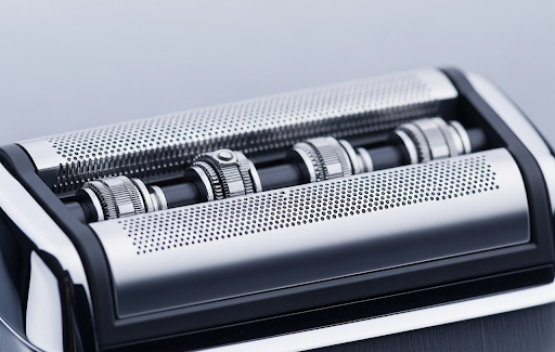
Foil shavers typically use a fine metal foil mesh that is driven by a motor that moves reciprocating blades. The gap between the blades and the foil is very small, allowing for precise hair cutting. The more blades a shaver has, the more coverage it provides, reducing the chance of missing hairs.
- Advantages: Suitable for shaving large areas, high efficiency, simple design, and easy to clean.
- Disadvantages: As the number of blades increases, the size of the blade head also increases, which may affect the flexibility of operation, especially when working in curved areas such as the chin or nose.
2. Rotary shaver (commonly found with 3-4 blade rings)
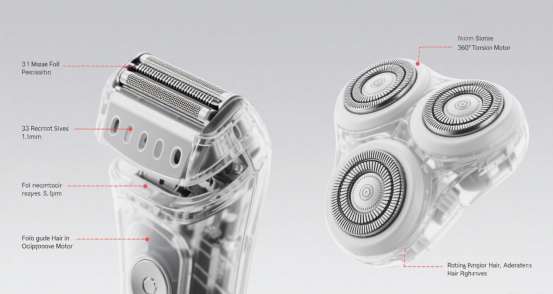
Rotary shavers use multiple rotating blade rings, each containing multiple small blades. The rotating blade rings help grab hair and cut it quickly, giving you an efficient and thorough shave.
- Advantages: The rotating blade ring can closely follow the skin and adapt to the natural contours of the skin, which is very suitable for dealing with coarse hair and dense beard areas.
- Disadvantages: The rotating cutter head may make a lot of noise, and some complex designs are prone to accumulating hair and dirt, which is a bit troublesome to clean.
3. Other factors that affect shaving results
While the number of blades is important, the quality of the shaving effect is also closely related to factors such as the blade sharpness, design precision, and motor torque. Sometimes, a 2-blade razor, with its more sophisticated design and stronger power, may provide a better shaving experience than some 4-blade razors with loose blades .
3. Advantages and disadvantages of the number of blades
The idea that “more blades is better” is certainly appealing, but in reality, multi-blade designs are not without their problems. Let’s look at the pros and cons of multi-blade designs.
1. Advantages of multiple blades (3-4 blades)
- Shaving faster: Multiple blades can cover more hair and shorten shaving time by about 10%. For users who are short on time in the morning, a 3-blade or 4-blade electric shaver can help you save valuable time.
- Closer shaving effect: Multiple blades cut layer by layer to provide a more thorough shaving effect, reduce stubble residue, and keep you refreshed all day long.
- Reduce skin irritation: The multi-blade design reduces repeated sliding during shaving, which can effectively reduce friction on the skin and is especially suitable for users with more sensitive skin.
2. Shortcomings of multiple blades
Small areas are not easy to handle: The more blades there are, the wider the cutter head will become, which may make the operation less flexible when handling small areas such as the chin and nose.
Increased power consumption and shorter battery life: More blades require more power, so battery life may be reduced accordingly. If you need to go out or travel frequently, battery life becomes an issue that needs to be considered.
High maintenance cost: Multi-blade razors are more complicated to clean than single-blade or double-blade razors, and hair tends to accumulate in the gaps between the blades. If not cleaned in time, the shaving effect may also be affected.
4. Choose the number of blades that suits you
To sum up, the more blades, the better. The most important thing is to choose according to your needs. The following are blade recommendations for different needs:
| Requirement Type | Recommended number of blades | Core reasons | Model reference |
| Daily basic shaving, sparse hair | 2 knives | Simple design, easy to carry, suitable for basic needs, long battery life | Entry-level 2-blade razor |
| Sensitive skin, afraid of irritation | 3 knives | Provides a gentler shaving experience with less friction, suitable for sensitive skin | 3-blade razor designed for sensitive skin |
| Coarse beard, seeking a clean shave | 4 knives | Multiple blades can achieve superimposed cutting, suitable for hard hair, and the shaving effect is more thorough | High-end 4-blade razor |
| Frequent business trips, portability is a priority | 1-2 knives | Small size, easy to carry, suitable for users who travel frequently | Portable 1-2 blade electric shaver |
| Lazy users who are afraid of trouble | 3 knives (with cleaning station) | It comes with a cleaning station, eliminating the trouble of manual cleaning, suitable for users who pursue convenience | 3-blade shaver with cleaning station |
5. Summary: Choosing the one that suits you is the most important
Is the question “more blades, better?” There’s no single answer. While multiple blades can improve shaving efficiency, they can also have side effects, such as reduced battery life and inconvenient cleaning. Therefore, it’s important to choose based on your needs and avoid blindly pursuing more blades.
When buying, try to think about what you care about most: a quick shave or a gentler experience? By understanding the pros and cons of different blade counts, you can find the electric shaver that best suits you and enjoy a more efficient and comfortable shaving process.