

Beard Styling: How to Grow a Beard Without Looking Like a “Wild Man”

1. Why do many people look messy or even “savage-like” after growing a beard?
You’ve probably seen a beard that hasn’t been trimmed in a few days: fuzzy edges, messy hair directions, no boundaries at the bottom—the whole thing looks like it hasn’t been trimmed in a while. The problem usually lies in a few things:
Lack of clear boundaries
A beard without a defined cheek line, neck line, or jawline is like a canvas without edges—it looks unkempt and untidy.
that doesn’t match your face shape
isn’t necessarily better. Those with a protruding jaw who overdo it with thicker cheeks can make their head look heavier. A round face with a loose, round beard can actually make it look even rounder. A good beard should be a tool for modifying your face shape, not just a mere accumulation of hair.
Inadequate care/maintenance:
Dryness, tangles, dander, and unruly hairs often stem from not washing, moisturizing, or trimming. Any reliable beard-growing guide will list “cleaning, moisturizing, and trimming” as essential steps.
Ignoring transition/stage management:
There’s an awkward period in a beard—it’s not dense enough, not even, and in the middle of a work-in-progress. If this section isn’t treated properly, it can easily become messy, and the boundaries will blur as it grows.
To sum it up in one sentence: If you want to “grow a beard without looking wild,” you have to do a good job in four things: selection, boundaries, care, and transition.
2. Step 1: Choose the right style first—decide the style based on your face shape and growth condition
Before letting your beard grow freely, ask yourself two questions: What is your face shape? And how does your beard grow (density, direction, thinning areas)? The answers will determine the style you should choose for a look that’s both flattering and manageable.
Choose according to face shape
- Oval/Oval face: The most friendly; almost all styles can be controlled. Be bold and try it.
- Square face/square jaw: keep the cheeks short and clean, and the middle of the chin can be slightly longer to weaken the edges.
- Round face: Choose a style that can “lengthen” the facial lines to avoid making the cheeks appear round.
- Long/rectangular face: Moderately widen the cheeks to balance the vertical proportions.
- Heart-shaped/triangular face: Strengthen the chin to avoid wide cheeks.
If your beard grows unevenly (sparse or patchy), start with a short beard or designer stubble, which is a safe and low-maintenance entry point.
Recommend several “not too wild” beard styles
- Designer stubble (1–3 mm): Textured but not overbearing, perfect for men who are just starting out.
- Short and Stylish (5–15 mm): Maintain thickness but create sharp edges for a refined look.
- Hoop beard/goatee: concentrated area, easy to control, suitable for those who want low maintenance.
- Gradual style (short cheeks and slightly longer chin): strong sense of layering and neater visually.
Step 3: Draw the lines—cheek line, neck line and detail control
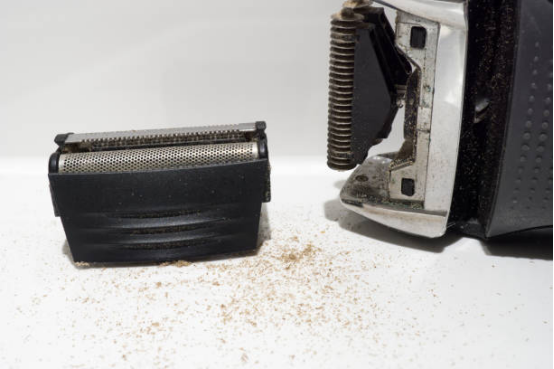
Even if your beard is stylish, a poorly defined border can make it look messy. Creating a border, like the seams of a suit, determines the overall success or failure of your beard. Using a foil shaver can refine the details and create a cleaner, more natural border.
cheek line
- Goal: Remove the messy raised parts and make the upper edge natural and slightly higher.
- Method: First use a beard trimmer to control the length, then use a foil shaver to finely trim the fine hairs that protrude from the line to make the beard boundary clearer. It is safer than an ordinary razor and reduces the risk of scratches.
Neckline
A common mistake is trimming the neckline too high, leaving the beard looking like an isolated goatee. Use a foil shaver to shave stray hairs along the natural fold line of the neck, leaving a clean bottom edge while maintaining a natural transition.
Lip line & chin details
- Covering the lip line can make it look sloppy. Use a knife or trimmer for general details and a foil shaver for the details, ensuring a clean, crisp upper lip line.
- The same goes for the temples and side lines; a light shave can avoid harsh cuts.

Step 4: Daily care and maintenance—the secret to a wild beard
If you compare your beard to a garden, daily care consists of watering, pruning, and weeding. None of these can be neglected.
Cleanse (treat your beard like you would your hair)
- Wash your beard every time you take a shower. We recommend using special beard wash/shampoo, which is gentler than ordinary shampoo and protects your facial skin.
- Pat or blow-dry after washing. Do not sleep with it wet or let it air dry naturally, as it will easily become tangled.
Moisturizing (beard oil, beard balm)
- Beard oil softens hair, reduces frizz, and nourishes the skin: apply an appropriate amount to the palm of your hand, rub it warm, and apply it along the direction of hair growth, then use a comb to distribute it evenly.
- Beard balm is suitable for those who need a sense of styling and can give the beard shape and support.
Combing and Tools
- A beard comb or brush can help to smooth the flow of hair by working the oils from the roots to the ends, and it can also help to check for any stray hairs or tangles.
- Comb gently to avoid pulling out the hair. Regularly use small scissors to trim off the stray hair or the short hair that is not long enough to be seen.
Regular pruning/maintenance
- Use a beard trimmer to trim large areas, and use a foil shaver to trim detailed edges, lip lines, and necklines for a cleaner and more precise look.
- It is recommended to repair it once a week or two. Small adjustments are better than drastic changes at one time.
- When pruning, first use a long blade to observe the overall shape, then gradually shorten it to maintain natural symmetry.
Skin care
- The skin beneath your beard can also become flaky, itchy, or irritated. Occasional exfoliation, getting enough sleep, and eating a healthy diet are all fundamental.
- If you are considering dyeing, choose a gentle formula and do a sensitivity test first.
5. How to get through the awkward period
During the first four weeks of growing a beard, you’ll experience a “work-in-progress” phase: neither handsome nor complete. The solution: manage expectations and proactively maintain your beard.
Don’t expect to become a movie star overnight. Patience is the first priority.
In the early stages, keep your beard at a short to medium length (5–15 mm) with well-defined borders; wait until it is dense enough before pursuing styling.
Finding a photo of a role model for your barber is more accurate than a verbal description.
- Zone trimming: Treat the cheeks, chin, and neck separately. Zone thinking is more natural than a one-size-fits-all approach.
6. Practical process (quick version)
Early Stage (Weeks 1–4): Allow growth to continue, but don’t neglect cleaning. In Week 2, use a long-speed trimmer to create a natural outline and a foil shaver for fine details.
Mid-Stage (1–3 Months): Establish a style, trim edges, and regularly use beard oil and a comb.
Mature Stage: Focus on maintenance and fine-tuning, with occasional fades, partial lengthening, or minor style changes.
VII. Frequently Asked Questions
What to do about a thinning beard? Start with a short beard, focusing on maintenance and patience.
Does your beard get thicker as it grows? Not necessarily. Genetics and hormones play a major role. Blindly letting it grow will only make it look sloppy.
What to do after exercise? Cleanse and dry your hair immediately after exercise, and gently comb and style if necessary.
Razor or trimmer? A trimmer is good for large areas and length control, while a foil shaver is cleaner for detail.
8. Conclusion: From “savage” to “handsome” is a gradual process
Growing a beard isn’t a one-time achievement; it’s a craft. With careful attention to style, boundaries, daily maintenance, and transition management, you can transform your beard from a wild, unruly mess into a stylish, tasteful facial ornament. Using a foil shaver to refine edges and details will enhance your beard’s appearance and ensure each trim is safer and more efficient.