

How long does it take to grow a beard? Uncovering the rhythm and determining factors of beard growth

If you’ve recently started growing a beard, you’ve probably stared at yourself in the mirror a few times—does that tiny bit of stubble mean the “beard era” is finally here?
But then a few days later, you wonder, “Why isn’t it growing? Am I just not naturally good at it?” Don’t worry, this is a question almost every guy has asked.
There’s no one-size-fits-all answer to how quickly a beard grows. Some people can achieve a prickly stubble in a week, while others can look freshly shaved for a month. The real key lies in genetics, hormones, lifestyle habits, and even your shaving technique—all factors that can speed up or slow down your beard-growing journey.
Let’s start from the beginning.
1. How does a beard grow? — The hair follicle cycle theory
The growth of a beard is similar to that of hair. Each hair goes through a cycle: growth phase (Anagen) → regression phase (Catagen) → resting phase (Telogen).
Sound like textbook stuff? But it’s actually this cycle that determines everything. Only during the “growth phase” are hair follicles truly active and growing.
The growth phase for facial hair lasts from a few months to a year, while the catagen and resting phases are much shorter. This means that not all the hair follicles on your chin are working at once; some are growing while others are “resting.” This explains why some people have sparse beards while others have thick, bushy beards.
As for speed, mainstream dermatology materials (such as Healthline, Beardbrand, etc.) all point out:
- The average daily growth is about 0.3 to 0.5 mm and about 1 to 1.5 cm in a month.
But don’t take “averages” too seriously. Just like a class average, some people get perfect scores while others barely pass. Your beard-growing speed might be completely out of range.
2. How long does it take to go from a “smooth chin” to a “stylish beard”?
Here’s a rough timeline:
| stage | Time Range | Characteristic performance |
| stubble stage | A few days to 1 week | A short stubble appears, which is prickly to the touch but not yet formed |
| Early beard | 2–4 weeks | Visible hair is already visible, but it is unevenly distributed or sparse |
| Mid-growth period | 1–2 months | Increased density, gradual contouring |
| Mature beard | 2–4 months | Can form chin beard and beard |
| Long beard | 4 months and above | Can be trimmed to create a stylish beard; requires regular maintenance |
Most men will have a relatively “complete” beard within 2 to 4 months.
Of course, if you are born with a thin beard or low hormone levels, it may take longer.
A barber friend once said with a smile, “Growing a beard is actually like working out. You can’t expect to see abdominal muscles after three days of training.” – Similarly, growing a beard is an endurance race, not a sprint.
3. Why do everyone grow at different rates?
There are many reasons, but they can be roughly divided into the following categories:
1. Genetics and ethnic background
This is almost the most crucial factor. If your father or grandfather had a beard, you likely inherited similar hair follicle density and hormone sensitivity.
Conversely, if your family’s male beards are generally sparse, you may be born with fewer hair follicles. There are also differences between different ethnicities. For example, Mediterranean men generally have thicker beards than Asian men.
2. Age and hormones
The prime beard growth period is between 20 and 35, when testosterone levels are at their peak.
If you’re not yet at this stage or have already passed your peak, growth will naturally be slower.
But don’t be discouraged—many men don’t achieve full-blown beards until around 30.
3. Lifestyle and nutrition
Don’t underestimate the impact of sleep, diet, and exercise. Protein, zinc, B vitamins, and iron—these are the fuels that fuel hair follicles.
Exercising regularly, smoking, or malnourished children can cause beards to “go dark.” However, maintaining a healthy routine and regular exercise can significantly improve hair health.
4. Care and cleaning
Keeping your skin clean and maintaining good blood circulation also creates a better environment for hair follicles to grow.
Some people gently massage their face or cleanse with warm water to activate the follicles.
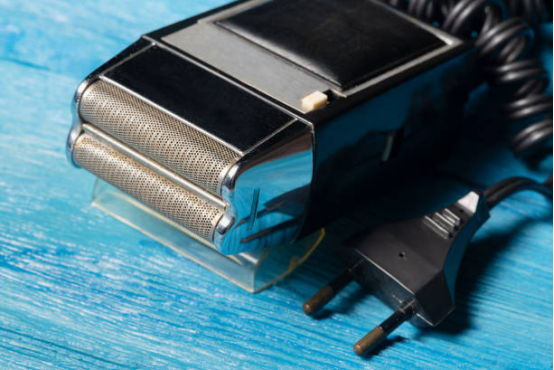
If you want to maintain a clean and neat appearance, using a foil shaver to regularly trim the edges won’t affect growth and will help create a cleaner beard line.
4. Want to make your beard grow faster? You can do this
While we can’t control our genes, we can control our habits. The following methods, proven by many dermatologists and beauty experts, can help optimize our growth environment:
- Don’t rush to trim. Allow at least 3-4 weeks of natural growth to give the beard a chance to form.
- Eat adequate nutrition, especially foods rich in protein and vitamins A, B, and C, zinc, and iron.
- Maintain a good sleep and rest schedule. Sleep promotes repair in the body and allows hair follicles to work actively at night.
- Exercise regularly. Strength training can increase testosterone levels, potentially helping hair growth.
- Reduce stress, quit smoking, and limit alcohol consumption. Stress can cause hormone fluctuations, which can inhibit hair follicle activity.
- Gentle care. Wash your face with warm water and massage your chin area to help stimulate blood circulation.
The most important thing is patience.
Many people start to doubt their lives after the second week of growing their beard, but that’s just the transition period, when the beard is still laying its foundation. After a few months of persistence, you’ll suddenly find it has grown into a forest.
5. Frequently Asked Questions
Q1: Do those who can grow a beard in just a few days have any secrets?
A: There’s no secret; it’s mostly genetics. Some people have extra-sensitive hair follicles; they’re the lucky ones.
Q2: I haven’t seen a beard in a month. Is it hopeless?
A: Don’t be pessimistic. Some hair follicles are slow to activate, so sparse hair doesn’t mean it won’t grow. Give yourself another 2-3 months to observe.
Q3: Can supplements speed up beard growth?
A: Nutritional supplements can certainly improve overall health, but “quick-acting beard pills” rarely exist. Their effectiveness is limited, so avoid blindly believing advertisements.
Q4: Will a beard grow indefinitely?
A: No. Every beard has an “ultimate length,” typically ranging from a few centimeters to over ten centimeters, after which it naturally stops growing.
6. Summary: Give your beard time and give yourself some patience
Growing a beard isn’t just a matter of waiting for it to grow; it’s a journey of patience, confidence, and style.
On average, it takes most people two to four months to see a fully formed beard.
Don’t rush or overdo it during this time. Simply use a foil shaver to trim and maintain a clean outline.
True charm lies not in the size of your beard, but in your willingness to give it time to grow.
When you feel a soft yet strong beard one day and smile in the mirror with a bit of “old man” confidence, you will know at that moment that all the waiting is worth it.