

Can a beard keep your face warm? — Uncovering the insulation secrets of facial hair

When winter comes, many people will ask, “Can growing a beard really make the face warmer?”
It seems reasonable—after all, animals have hair to keep out the cold, so are our human beards just for decoration?
Actually, the answer isn’t that simple. While beards do have a certain insulating effect, it doesn’t guarantee you’ll be cold-proof. The effectiveness of beards also depends on their density, climate, and even your grooming habits. Let’s explore this topic from the perspectives of science, evolution, physiology, and practical care.
1. Scientific perspective: Is a beard really a natural “thermal insulation layer”?
Interestingly, this question has been studied scientifically.
A study published in Military Medicine found that in cold or windy environments, facial hair can create an additional “air barrier” that slows heat loss. The researchers pointed out that beards can create a buffer zone between the skin and the outside air, just like wearing a thin windproof layer.
We can all feel this in real life—a thick beard can indeed help block some of the cold in a cold wind.
An article in Popular Science notes that the temperature of the lips is typically about 1°C higher than that of the cheeks, and beards may act as a buffer in this area. In other words, beards don’t directly “heat” the body but rather slow down heat loss.
So what factors determine the warmth-retaining power of a beard?
- Density and thickness: A dense, coarse beard insulates better.
- Length and coverage: The warmth retention effect is better when the chin, cheeks, and neck are covered.
- Climate and humidity: The effect is obvious in dry and cold weather, but when the humidity is too heavy, the beard may “absorb cold” instead.
So, it’s true that beards can keep you warm, but they are more like a natural protection that “adds icing on the cake” rather than a universal cold-proof magic weapon.
2. From an evolutionary perspective: the significance of beards
Many people think that beards are just a symbol of male hormones, but in fact they once had “practical value.”
In ancient times, beards may have served as a natural barrier against wind, sun, and cold. In cold regions, a thick beard helps maintain facial warmth; in hot, dusty areas, it acts as a filter and protects against the elements.
Interestingly, some studies have also shown that facial hair can provide some protection by buffering external impacts.
However, in modern times, with improved heating, clothing, and living conditions, the “insulation task” of beards has been weakened. But that little bit of “natural windbreak” can still keep you feeling a little bit of warmth when cycling or commuting in winter.
3. Don’t get me wrong: beards are not a universal warming tool
Although beards have a heat-insulating effect, don’t overdo it. The following are some common misunderstandings that many people have fallen into.
A beard can’t replace a scarf or mask.
Its insulation is limited, and in sub-zero outdoor conditions, a beard is just a first line of defense. For complete protection from the cold, you’ll still need a scarf or wind shield.
A wet beard can actually make you colder.
Rain, snow, condensation from your breath, and sweat all cause your beard to absorb water, which evaporates and takes away heat. The result is even colder.
Thickness doesn’t mean more comfortable.
A thick beard can easily freeze in the wind and snow and can even irritate the skin. Explorers in polar regions choose to shave their chins to avoid frost accumulation.
The insulation effect varies from person to person.
Hair density, skin oils, and climate can all change the “insulating performance” of a beard. For some people, its insulation effect is almost negligible.
In short: beards are helpful, but they’re not a cure-all. Don’t forget to wear a scarf just because you have a “hairy face.”
4. Cold Weather Beard Care: Keeping It Warm and Stylish
If you want to keep your beard warm in the winter, you have to take good care of it. Otherwise, problems such as dryness, icing, and tangles will make you frustrated.
Keep your beard at the “right” length
Too short won’t keep you warm, and too long will easily tangle. A chin length of 1.5 to 3 cm is ideal for warmth.
Trim regularly to prevent your beard from becoming a “messy insulation layer.”
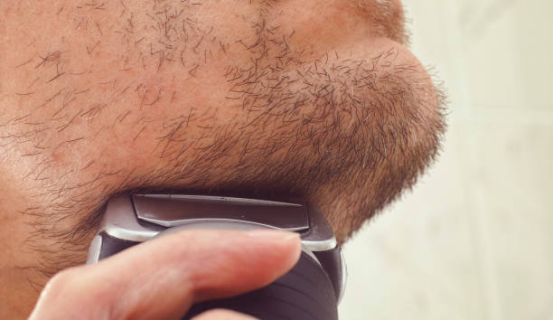
Regularly trimming the edges with a foil shaver or trimmer will keep your beard looking neat and close to your face, making it more comfortable and reducing wind intrusion.
The benefit of a foil shaver is that it provides a close shave with minimal irritation, making it a gentle alternative for cold weather.
Enhance moisturizing and nourishing
Cold weather can dry out your beard and cause it to split. Massaging beard oil or balm into your underlying skin daily can help prevent brittle hairs.
If you live in a dry climate, a beard balm with a mild antifreeze formula may be even more effective.
Don’t over-clean
Many people cut back on washing their beards in the winter because their faces feel dry. However, proper cleansing is more important—it removes dust, oil, and pollutants, preventing itchiness. Use warm water and gentle cleansing products.
Pay attention to temperature and humidity changes
Before leaving the house, dry your beard before going out. Don’t let moisture remain in the hair; otherwise, a gust of cold wind will make you shiver.
5. Real-world scenarios: Beard insulation performance in different weather conditions
| Scenario | Beard Advantages | Potential Problems | suggestion |
| Chilly winter day | Reduce wind and cold stimulation | Incomplete protection when the wind is strong | Add a scarf and keep the chin and neck hair |
| dry and cold environment | obvious thermal insulation | Dryness and itching | Enhance moisturization with beard oil |
| wet and cold weather | Decreased effectiveness | Water vapor retention cooling | Keep dry and wipe promptly |
| Winter morning commute | Buffering cold air | Dampness after sweating | Dry or comb your hair promptly when you get indoors |
6. Frequently Asked Questions
Q: Can a short beard also keep you warm?
A: The effect is limited. A short beard cannot form a significant air layer. Only a beard of medium length or longer can provide a significant sense of heat retention.
Q: Is it still useful to grow a beard in tropical regions?
A: Yes. Although it’s not for warmth, a beard can actually protect against the sun and dust in the tropics.
Q: Can I rely solely on my beard to keep me warm?
A: I don’t recommend it. A beard is just a bonus. To stay fully warm, you still need a scarf, a coat, and good care.
7. Conclusion: The temperature of the beard is more than just warmth
A beard can indeed keep your face slightly warmer in cold weather, especially in dry, cold climates or when there’s a slight breeze, but it acts more like a natural buffer than a true warming agent.
The key to achieving both comfort and warmth lies in daily care. Using the right shampoo and conditioner, moisturizing oil, and a precise, well-fitting foil shaver will help your beard withstand the cold while staying fresh.
A winter beard isn’t just about style; it’s about attitude.
Keep it neat and warm, and you’ll find that even in the bitter cold, a layer of facial hair can make you feel more at ease.